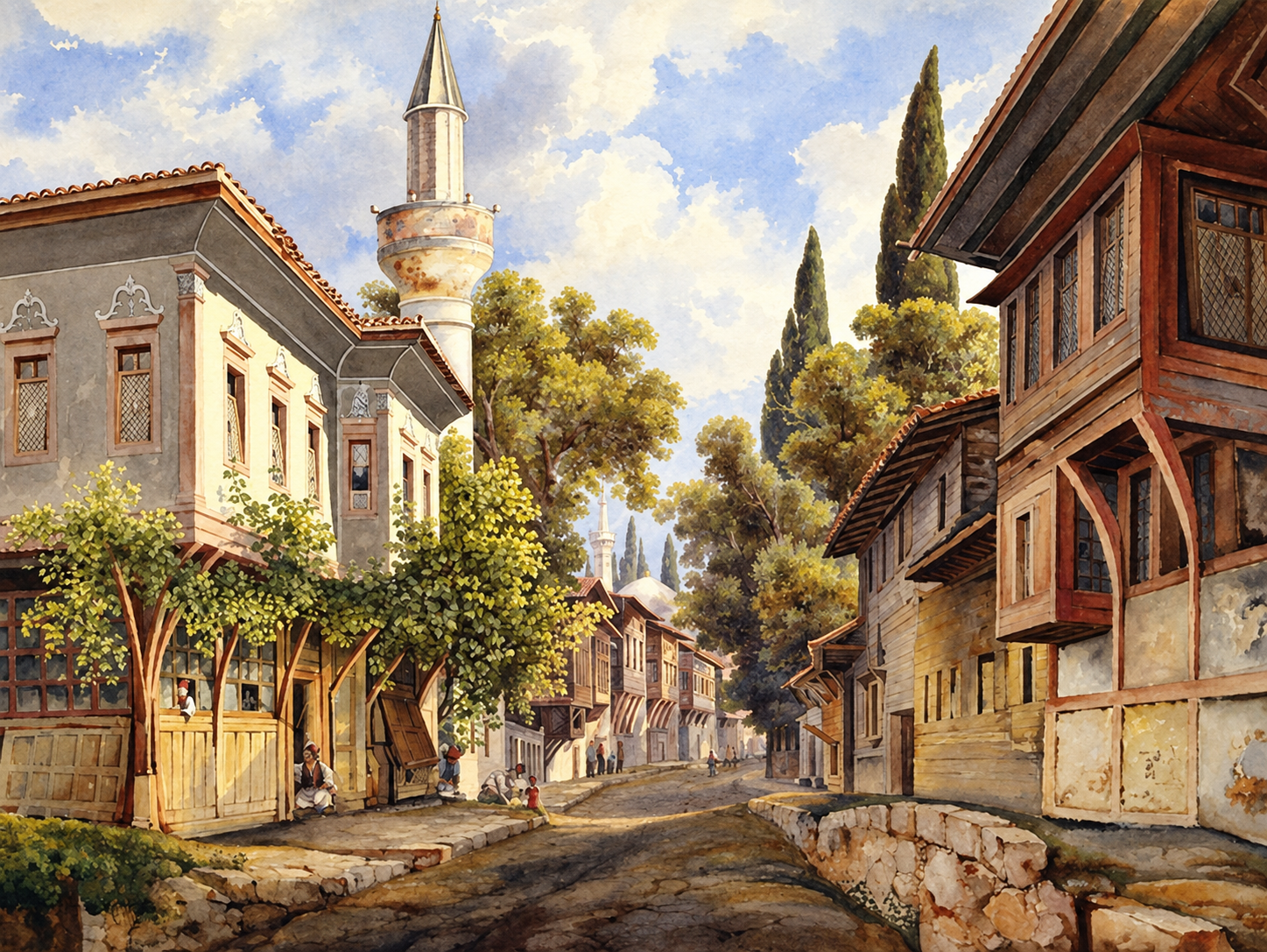
A watercolor view of an Ottoman neighborhood and minaret
Home

Diwan Collective · Our story

Our story.

From Istanbul to New Jersey

Inspired by the culture of awqaf in Istanbul during his time there studying Ottoman History, our founder Abu Ayoub sought to build something similar here in New Jersey when he returned. While in Istanbul, Abu Ayoub took part in a small Reading Majlis which motivated him to do something similar when he returned. However, lacking a consistent and affordable space, Abu Ayoub began to think bigger and established Diwan Collective - a waqf of intellectual Islamic discourse covering topics in history, philosophy, political thought, Islamic art and much more.

This 'Waqf' وقف of Diwan Collective seeks to revive the Islamic intellectual spirit among all Muslims and other like minded community members by cultivating conscious, critically engaged, and morally grounded minds who understand their historical position, their contemporary challenges, and their civilizational responsibility.

The work before us

It is a 'Waqf' وقف to:

01

Revive the spirit of the Islamic intellectual tradition

From history and politics to literature and the arts, we aim to reconnect members with the adab, depth, richness, and seriousness that historically defined Muslim scholarship and intellectual leadership.

02

Develop an appreciation for classic and contemporary Islamic thought

We want to make accessible the works and texts of major thinkers, movements, debates, and intellectual trajectories that shaped/are shaping Islamic discourse.

03

Awaken political consciousness of the Muslim condition globally

Enabling members to understand colonial legacies, global power structures, Muslim struggles, liberation movements, and the political economy shaping the Ummah today.

04

Create a 'Waqf' وقف that is not just intellectually enriching, but aesthetically true to Islamic ethos

Our 'Waqf' وقف will foster an aesthetic that follows the Islamic ethos of physical spaces, encouraging closeness rather than isolation, shared spaces rather than separation, shared resources and exchange of knowledge, engagement in the Islamic arts, and ethical consumption over excess

More than consumption

This 'Waqf' وقف exists not merely to consume books, but to form thinkers, conscious Muslims, and future intellectual leaders of the Ummah.

Gather with us